
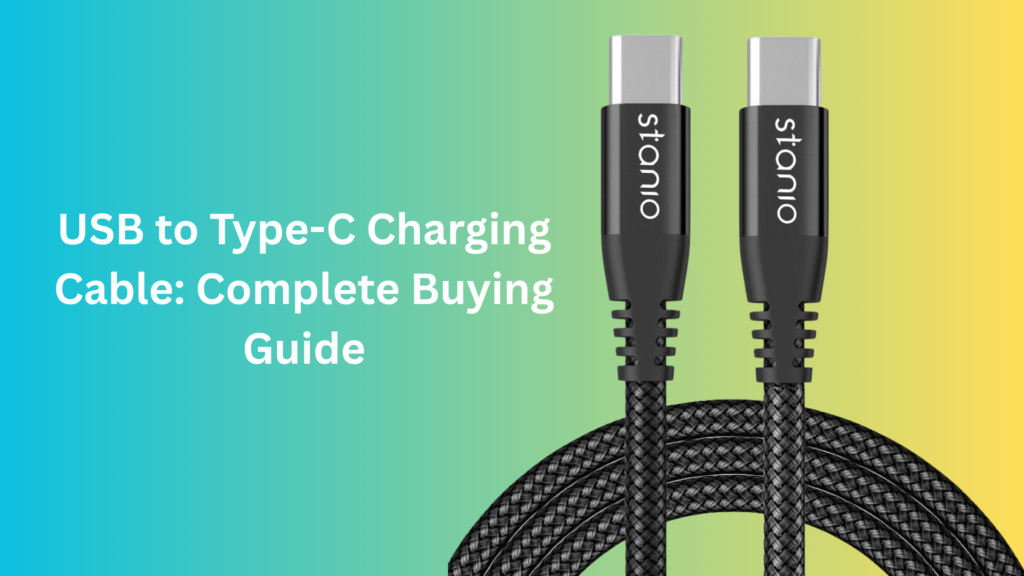
Looking for the best USB to Type-C charging cable? Learn how to choose durable, fast, and safe cables. Discover why Stanio cables deliver long-lasting performance.
Introduction: Why Choosing the Right Cable Matters
A USB to Type-C charging cable is one of the most commonly used tech accessories today. From smartphones and power banks to car chargers and accessories, this cable plays a critical role in your daily digital life.
But not all cables are built the same.
A low-quality cable can:
- Slow down charging speed
- Damage your device battery
- Overheat during use
- Break within months
Choosing the right cable is no longer optional — it’s essential.
What is a USB to Type-C Cable?
A USB-A to USB-C cable connects traditional USB ports (USB-A) to modern USB Type-C devices.
Common Use Cases:
- Charging Android smartphones
- Connecting power banks
- Using car chargers
- Data transfer between devices
Despite the rise of USB-C to USB-C, USB-A to Type-C cables remain widely used due to compatibility with older adapters.
Key Features to Look for in the Best USB to Type-C Cable
1. Fast Charging Support
Look for cables that support:
- Quick Charge (QC)
- Fast charging up to 18W–30W
Cheap cables often fail to deliver consistent power.
2. Strong Build Quality
A durable cable should include:
- Reinforced joints
- Braided or high-quality TPE coating
- Bend resistance
This directly impacts lifespan.
3. High-Quality Copper Core
The internal wiring determines performance.
Better copper =
✔ Stable charging
✔ Less heat
✔ Longer life
4. Secure Connectors
Loose connectors cause:
- Charging interruptions
- Port damage over time
Precision-fit connectors are critical.
5. Safety & Heat Control
A good cable manages:
- Voltage fluctuations
- Heat buildup
This protects your device battery.
Common Problems with Low-Quality Charging Cables
Many users face these issues:
- Cable stops working within 3–6 months
- Slow or inconsistent charging
- Phone heating during charging
- Connector becoming loose
These are signs of poor engineering, not normal wear.
Why Stanio USB to Type-C Cable is Different
At Stanio, we design cables as long-term tools, not disposable accessories.
Engineered for Reliability
✔ High-purity copper core for stable power delivery
✔ Reinforced connectors for long-term use
✔ Optimized heat management for device safety
✔ Flexible yet durable exterior for daily handling
Real-World Performance
The Stanio cable is designed for:
- Daily charging (home & office)
- Travel and on-the-go use
- Car charging setups
- Power bank connectivity
It delivers consistent performance across all scenarios.
USB-A vs USB-C: Should You Still Buy USB to Type-C?
Yes — and here’s why:
| Feature | USB-A to Type-C | USB-C to USB-C |
|---|---|---|
| Compatibility | Very High | Medium |
| Charging Speed | Good | Very High |
| Usage | Universal | New devices |
If you still use:
- Standard chargers
- Car USB ports
- Older power banks
Then USB to Type-C is still essential.
How to Increase Cable Lifespan
Follow these simple tips:
- Avoid bending near connectors
- Don’t pull the cable by the wire
- Keep away from extreme heat
- Use certified chargers
A good cable lasts longer with proper care.